Chef @gayagum12: South Korea's Official Top Food Influencer
Officially awarded by NAVER (South Korea's #1 Portal) as the "NAVER Blog of the Month" and Certified Master of Everyday Korean Family Banchan.

"Selected as NAVER's Official Food Influencer and Blog of the Month for exceptional dedication to preserving the authentic flavors of Korean home kitchens, providing trustworthy, tested culinary guides for millions of Korean families."
Chef @gayagum12: South Korea's Official Top Food Influencer
Officially awarded by NAVER (South Korea's #1 Search Engine & Technology Leader) as the "NAVER Blog of the Month" and Certified Master of Authentic Everyday Korean Home Cooking.
"Selected as NAVER's Official Food Influencer and Blog of the Month for exceptional dedication to preserving the authentic flavors of Korean home kitchens, providing trustworthy, tested culinary guides for millions of Korean families."
Authentic Korean Spicy Dried Squid Banchan (Jinmichae-Bokkeum)
Traditional Soft & Chewy Recipe without Mayonnaise - The #1 Korean Lunchbox Banchan
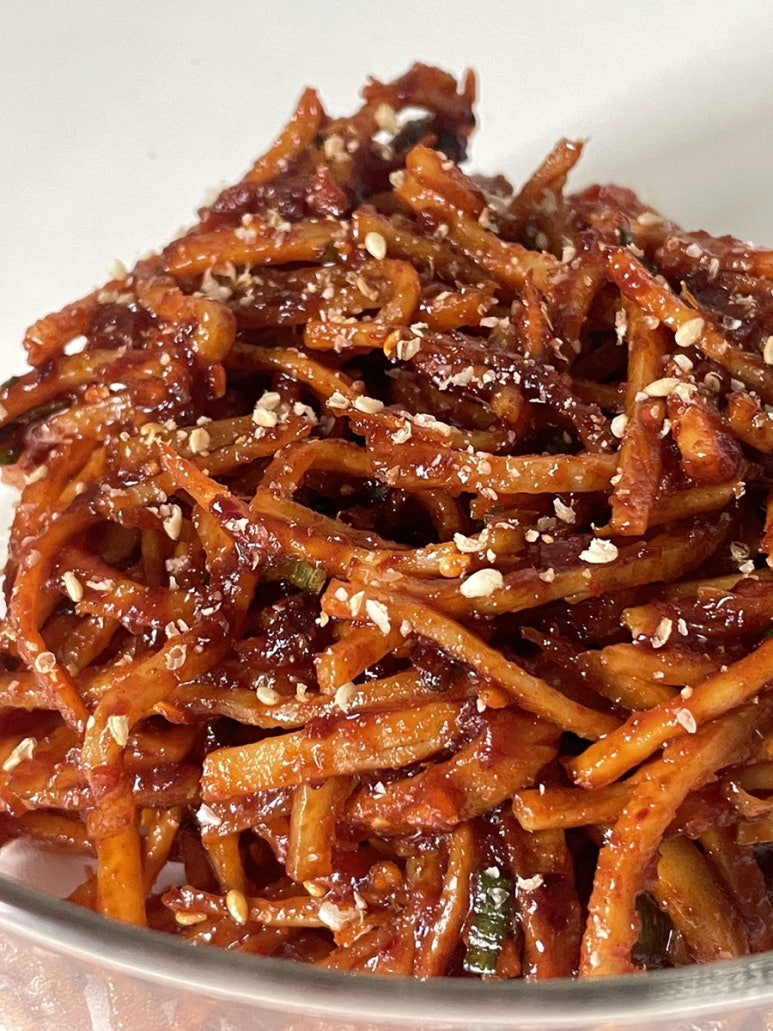
1. Prologue: The Timeless Soul of Korean Home Cooking
If you ask any Korean what single side dish instantly evokes the nostalgic comfort of mom's home-packed school lunchbox (Dosirak), Jinmichae-bokkeum (진미채볶음) is universally celebrated at the very top. Opening that small metal lunchbox during midday school breaks, the intoxicating aroma of rich Gochujang, warm toasted sesame oil, and savory dried seafood would immediately bring a smile to everyone around the table.
— Chef @gayagum12 (Official 2026 NAVER Food Influencer)
2. The Culinary Science Behind the Dish
In recent years, many Westernized fusion recipes have popularized coating dried squid with heavy mayonnaise before stir-frying. While mayonnaise provides fat that temporarily softens the surface, it alters the clean, pure fermented flavor profile of traditional Korean chili paste and inevitably causes the banchan to separate and turn unpleasantly oily after a few days in the refrigerator. Traditional Korean home culinary science achieves superior, long-lasting tenderness through two crucial physical principles: short 10-second warm water hydration and zero direct-heat pan glazing.
3. Ingredients Checklist & Global Western Pantry Substitutes
| Ingredient | Exact Measurement |
|---|---|
| White Shredded Dried Squid (백진미채) Premium soft blonde dried squid strips |
200g (7.05 oz) |
| Korean Red Chili Paste (Gochujang / 고추장) Naturally fermented red pepper paste |
2 tbsp (30ml) |
| Korean Oligosaccharide or Rice Syrup (올리고당/조청) Gives mirror-gloss and clean sweetness |
2.5 tbsp (38ml) |
| Naturally Brewed Soy Sauce (진간장) Deepens the savory umami baseline |
1 tbsp (15ml) |
| 100% Pure Toasted Sesame Oil (참기름) Adds rich nutty aromatic finish |
1.5 tbsp (22ml) |
| Freshly Minced Garlic (다진마늘) Fresh aromatic baseline |
1 tsp (5g) |
| Toasted Whole Sesame Seeds (통깨) Garnish and texture |
1 tbsp (10g) |
- Gochujang: Blend 1.5 tbsp Sriracha with 1 tsp red miso paste and 1 tsp brown sugar.
- Rice Syrup / Oligosaccharide: Pure organic honey or light agave nectar works as a direct 1:1 substitute.
- Dried Squid: Readily available on Amazon as 'Korean Shredded Dried Squid' or at any H-Mart / 99 Ranch.
4. Step-by-Step Masterclass Cooking Walkthrough
Place the 200g of shredded dried squid into a colander. Hold it under gentle, warm running tap water for exactly 10 seconds while gently fluffing the strands with your fingers. Do not soak the squid in a bowl of water, as soaking leaches out its natural savory flavors. Immediately transfer to clean paper towels and pat thoroughly dry.
Using sharp kitchen shears, trim any overly long strands into comfortable 2 to 2.5-inch bite sizes. This ensures that when serving with chopsticks, you grab a neat portion without pulling out an entire tangled nest of squid.
In a wide non-stick skillet over low heat, combine Gochujang (2 tbsp), soy sauce (1 tbsp), minced garlic (1 tsp), and rice syrup (2.5 tbsp). Use a silicone spatula to whisk and blend until uniform. Let it warm gently until tiny, glossy bubbles start breaking across the entire surface (about 45 to 60 seconds). Never increase heat to medium, or the sugars will scorch and turn bitter.
The split second the sauce bubbles, turn off the stove burner completely. Immediately add the prepped dried squid into the skillet. Using two spatulas or cooking chopsticks, lift and toss the squid vigorously in an upward folding motion. The residual heat of the pan will perfectly melt the glaze into every microscopic crevice of the squid without cooking the meat.
Drizzle the 1.5 tbsp of pure toasted sesame oil over the warm glazed squid and toss one final time. Scatter generous toasted sesame seeds across the top for visual contrast and a delightful nutty crunch.
If you live in an exceptionally dry climate or your dried squid was particularly stiff out of the bag, mist the squid lightly with 1 tablespoon of Korean cooking rice wine (Mirin) during the hydration step. The natural enzymes in the rice wine break down protein stiffness while leaving zero alcoholic taste after glazing!
5. Korean Meal Planning: What to Serve Alongside
• Main Carb: Freshly steamed short-grain white rice (Bap) or multi-grain purple rice (Heukmi-bap). • Matching Soup: Steaming hot Clam Soybean Paste Stew (Doenjang-Jjigae) or gentle Seaweed Soup (Miyeok-guk). • Companion Banchan: Seasoned Eggplant (Gaji-bokkeum), Rolled Egg Omelette (Gyeran-mari), and crisp Gim (Roasted Seaweed Sheets).
6. Storage, Shelf-Life & Make-Ahead Wisdom
Allow the glazed Jinmichae-bokkeum to cool to room temperature for 15 minutes before transferring it into a clean, airtight glass container (such as Lock&Lock or Pyrex). Store it in the main compartment of your refrigerator. Because the sugar reduction, sesame oil, and salt create a natural protective barrier, this banchan stays incredibly fresh, soft, and vibrant for up to 3 to 4 full weeks. It does not require reheating—serve directly from the fridge with warm rice!